
TECHNOLOGY & IP
Our core conversion technology is our own.
The reactor platform at the centre of our pyrolysis work, a dual-fuel, self-sustaining, modular design, was engineered in-house and is protected by a granted US patent. We are not an integrator of someone else’s process. We are the developer of ours.
The technology base.
Six conversion routes, chosen by the material rather than by habit:
- Pyrolysis, on our proprietary modular reactor platform: biochar, pyrolysis oil, recovered carbon black and syngas from tires, wood, plastics and mixed residues.
- Hydrothermal carbonization (HTC), for wet and high-moisture streams such as sludge, food waste and algae, producing hydrochar without drying first.
- Hydrothermal liquefaction (HTL), converting wet biomass and organic sludges into bio-crude.
- Gasification, for waste-to-energy: clean syngas for power and heat.
- Torrefaction and densification, turning wood and agricultural residues into solid engineered fuels.
- Industrial thermal drying, at ~30 tonnes per day scale, for sawdust, sewage sludge and biosolids.
A second, separate US-granted patent covers biodegradable, waterproof thermoplastic starch materials, the foundation of our bioplastics work. It is distinct from the reactor patent and not pyrolysis-specific.
Choose a route, not a catalogue.
A material problem should lead to a process decision, not the other way around. Sorting, screening, shredding, densification, drying and thermochemical conversion are options, not stages every material must pass through. We specify a sequence only after characterizing the stream and evaluating the alternatives.
Preparation, contamination, material handling and residue management belong in the design from the beginning. An output is not a saleable product until its specification and destination have been established.
Where thermal conversion fits.
Thermal conversion heats material in a sealed, low-oxygen environment so that it breaks down rather than burns. Instead of ash and flue gas, the process yields recoverable outputs: a stable carbon-rich solid and, in many configurations, condensable oils and a gas that helps fuel the process itself. Our reactor is self-sustaining for that reason.
We do not promise generic emissions reductions, recovery yields or carbon benefits. Those are quantified for your feedstock and configuration during assessment and pilot, and verified where a claim depends on it. Mechanical routes remain part of every comparison.
Equipment: our platform, plus partners.
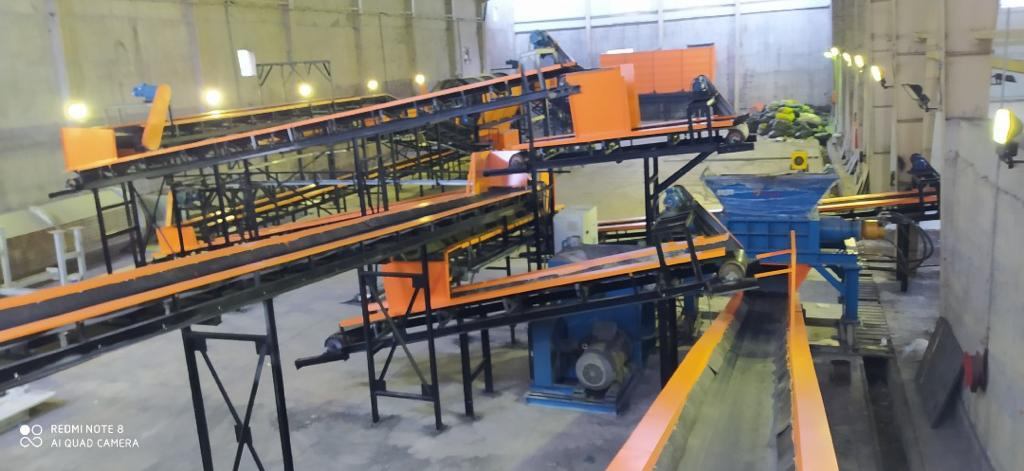
Around the reactor platform sits a fabrication and processing partner network: rotary conversion units, shredding and screening plants, sorting lines, dryers and process vessels, built by established fabricators and matched to feedstock and scale.
The photographs on this site show that partner network and are identified as such. Our own commissioned infrastructure runs in Turkey, where a landfill gas-to-energy site is already generating power. Further builds follow the same rule: no capital before pilot-scale evidence.
From specification to operation.
The assessment defines the questions. A pilot tests the route and generates operating data. The commercial review establishes whether the case holds. Only then do we agree capacity, siting, permitting, staffing, commissioning and the operating model: EPC turnkey delivery, equipment supply, a licence of the platform, or a program we run with you.